The Merge wasn’t the end of Ethereum’s transformation—it was the opening act. When Ethereum completed its transition from proof-of-work to proof-of-stake in September 2022, it cut the network’s energy consumption by roughly 99.95%. But the developers had always been clear that this was just one piece of a much larger puzzle. What comes next matters far more for anyone building, investing, or simply holding ETH.
Vitalik Buterin first outlined Ethereum’s post-Merge roadmap in late 2022, laying out six distinct phases with deliberately playful names: The Surge, The Scourge, The Verge, The Purge, and The Splurge. These aren’t marketing slogans—they describe real technical challenges that will determine whether Ethereum can handle millions of users or remain a network that buckles under demand. Some phases are already in motion. Others remain years away. Understanding what each one promises—and where the timelines have already slipped—matters if you want to see Ethereum’s trajectory clearly rather than through the lens of optimistic tweets.
This guide breaks down every phase of Ethereum’s roadmap as it stands in 2024, explains what recent upgrades like Shapella and Dencun have already accomplished, and shows you what these changes actually mean for users and developers in practical terms.
The Merge: What Actually Changed
Before diving into what comes next, you need to understand what The Merge actually fixed—and what it deliberately didn’t.
The Merge was Ethereum’s transition from proof-of-work (the energy-intensive consensus mechanism Bitcoin uses) to proof-of-stake. Instead of miners competing to solve cryptographic puzzles, validators now stake 32 ETH to propose and confirm blocks. This shift accomplished three things that matter enormously: it reduced energy consumption by approximately 99.95%, it decreased the rate of new ETH issuance by roughly 90%, and it laid the technical foundation for all future scalability upgrades.
What The Merge did not do was reduce gas fees or increase transaction throughput. This point gets lost in public discourse constantly. Ethereum’s block space remained fundamentally limited—same block size, same block times, just different people confirming transactions. Anyone promising that The Merge would make transactions cheaper was either misunderstanding the roadmap or deliberately misleading you. The Merge cut issuance and energy use, not costs.
This distinction matters because every subsequent phase of the roadmap builds on The Merge’s proof-of-stake foundation. Without it, sharding and other scalability solutions wouldn’t be possible. The Merge was the prerequisite, not the destination.
The Surge: Scaling Through Sharding
The Surge is Ethereum’s answer to the scalability problem, and it’s the phase that will most directly impact users through lower fees and higher throughput. The core idea is sharding—splitting the Ethereum network into 64 separate “shards,” each capable of processing its own transactions and smart contracts. Rather than every node processing every transaction, validators only need to handle a subset.
But here’s what many articles get wrong: Ethereum’s sharding approach has evolved significantly since the original roadmap. The initial concept involved actual state sharding—splitting the entire Ethereum database into pieces. This proved enormously complex. The current implementation, now called “Danksharding” after researcher Dankrad Feist, takes a different approach. Instead of splitting computation, it focuses on data availability. Rollups (Layer 2 scaling solutions like Arbitrum, Optimism, and Base) handle the computation off-chain, then post compressed transaction data back to Ethereum’s main chain. The shards exist primarily to store this data efficiently.
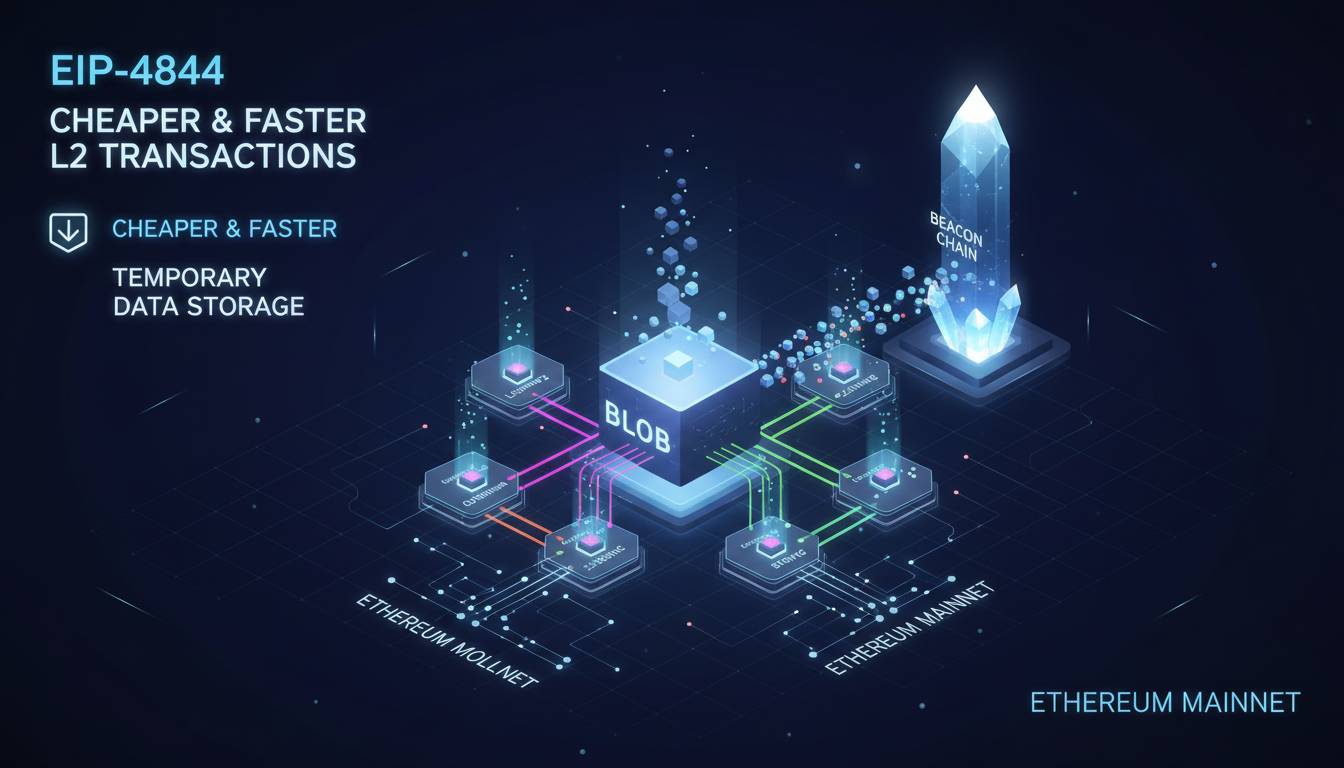
EIP-4844, deployed in March 2024 as part of the Dencun upgrade, introduced “proto-danksharding”—a stepping stone that adds data blobs to Ethereum blocks. These blobs allow rollups to post data more cheaply without increasing the permanent state size. Before Dencun, posting data from a rollup to Ethereum cost roughly $0.10-$0.30 per transaction. After Dencun, some users reported fees dropping below $0.01 during low-demand periods. This is the Surge in action, already delivering results before full sharding arrives.
Full Danksharding, still years away, will create 64 blob-carrying shards, dramatically expanding data availability while keeping the network decentralized. The technical complexity is staggering—researchers have been working on it for years—but the architecture is now settled. When it arrives, Ethereum should theoretically handle tens of thousands of transactions per second, compared to roughly 15-30 TPS today.
The honest caveat: timeline estimates for The Surge have consistently slipped. Full Danksharding was originally targeted for 2023-2024 in some optimistic presentations. Current realistic estimates point to 2025 or later. Ethereum’s development philosophy prioritizes correctness over deadlines, which means delays should be expected.
The Scourge: Addressing Maximal Extractable Value
If The Surge addresses throughput, The Scourge addresses something more subtle but equally important: the economic extraction that occurs within each block.
Maximal Extractable Value (MEV) refers to the value that validators can extract by reordering, front-running, or back-running transactions within a block. When you submit a trade on Uniswap, a validator or searcher bot can see your transaction in the mempool and insert their own trade ahead of you, capturing the price movement you triggered. This happens millions of times daily, and the extracted value runs into billions of dollars annually.
The Scourge’s goal isn’t eliminating MEV—that would require centralization or fundamental protocol changes that most consider unacceptable. Instead, the approach involves two tracks: making MEV extraction more transparent and democratizing access to the value it generates.
Proposer-builder separation (PBS) is the primary mechanism here. Instead of validators building blocks themselves, specialized builders create blocks and sell them to validators. This creates a competitive marketplace where builders compete to produce the most valuable block, while validators choose the most profitable one. The key insight is that PBS makes the MEV extraction process visible and auditable rather than happening in opaque ways that benefit only sophisticated actors.
EigenLayer, a project building on Ethereum, is exploring a related concept called “restaking” that could fundamentally alter how Ethereum secures itself while capturing MEV value. The project allows ETH stakers to secure other protocols in exchange for additional yield, effectively turning Ethereum’s security into a marketable commodity.
The honest limitation here: The Scourge is less visually dramatic than The Surge, and its timeline is vaguer. It’s happening incrementally through multiple upgrades rather than arriving as a single dramatic event. Some researchers argue that market-based solutions (like Flashbots’ MEV-Boost) have already addressed the worst excesses more quickly than protocol-level changes could, which raises legitimate questions about how necessary The Scourge’s full implementation actually is.
The Verge: Stateless Verification
The Verge targets one of Ethereum’s most underappreciated technical challenges: the growing burden of running a full node.
As Ethereum has operated for years, the state database—every account balance, every smart contract storage slot—has grown relentlessly. Running a full node now requires roughly 1TB of storage and increasing bandwidth. This centralization pressure threatens Ethereum’s core promise of decentralized, permissionless participation. If only well-funded organizations can run nodes, the network’s censorship resistance degrades.
The Verge aims to solve this through Verkle trees—a cryptographic data structure that allows proof of state without requiring validators to store the entire history. Instead of verifying a transaction by checking the entire chain, validators would use compact mathematical proofs. This would reduce the hardware requirements for running a node to something that could fit on a consumer laptop, potentially even a phone.
Verkle trees represent a genuine innovation in applied cryptography. They were first proposed for Ethereum in 2020 and have undergone multiple rounds of research and optimization. The technical implementation is complex because transitioning Ethereum’s existing state to a Verkle tree structure requires a coordinated hard fork and introduces new attack surfaces that must be carefully analyzed.
This is where Ethereum’s methodical approach becomes either admirable or frustrating, depending on your perspective: The Verge has no firm timeline. It awaits further cryptographic research and security auditing. Some within the Ethereum community believe it could arrive by 2026. Others think it might take longer. The protocol will continue functioning without it, but node centralization pressure will intensify.
The Purge: Simplifying the Protocol
The Purge is exactly what it sounds like: cutting technical debt and removing legacy code that accumulates over years of protocol upgrades.
Ethereum’s history includes numerous deprecated features, old transaction types, and historical complexities that no longer serve the network but must still be maintained. Each new upgrade adds complexity. Without deliberate cleanup, the protocol becomes increasingly difficult to reason about, audit, and secure. The Purge addresses this through two primary mechanisms: historical expiration and protocol simplification.
Historical expiration means nodes no longer need to store the entire transaction history beyond a certain window. Instead of every full node maintaining every block since genesis, nodes would only need to keep recent state plus occasional snapshots. This reduces storage requirements and sync times dramatically.
Protocol simplification involves removing unused features and standardizing transaction paths. For example, certain pre-merge transaction types or legacy storage mechanisms could be retired. The goal is making Ethereum easier to upgrade while reducing the attack surface for bugs.
The Purge overlaps somewhat with The Verge—many of the storage optimizations benefit both initiatives. Some of its elements have already been implemented through EIPs in recent upgrades. The more ambitious purge targets remain on the roadmap but lack specific timelines.
The Splurge: The Final Flourishes
The Splurge is the catch-all category for everything that doesn’t fit neatly into other phases: account abstraction improvements, further EVM (Ethereum Virtual Machine) optimizations, and various quality-of-life upgrades that make the network more capable or easier to use.
Account abstraction (EIP-4337, already live) exemplifies this category. Rather than requiring users to manage raw ETH for gas and complex private keys, account abstraction allows smart contract wallets that can define their own security logic, pay gas in ERC-20 tokens, or implement social recovery features. This sounds minor but represents a massive UX improvement that could bring Ethereum to mainstream users who find seed phrases and gas management incomprehensible.
The Splurge is deliberately open-ended because Ethereum’s developers recognize that they cannot predict every improvement the network will need over time. It’s the maintenance and evolution phase, continuing indefinitely.
Recent Upgrades: Shapella and Dencun in Action
Understanding the roadmap requires seeing it in motion. Two recent upgrades demonstrate how Ethereum’s development actually works in practice.
The Shapella upgrade enabled validator withdrawals—stakers could finally exit and retrieve their staked ETH plus accumulated rewards. More importantly, it implemented EIP-4895, which introduced a new transaction type for withdrawal receipts. This wasn’t dramatic in user-facing terms, but it completed The Merge’s economic loop. Without Shapella, staked ETH was effectively locked indefinitely, creating uncertainty about Ethereum’s monetary policy. Shapella resolved this, and the ETH market responded positively—the upgrade was well-executed with no significant disruptions.
The Dencun upgrade introduced EIP-4844 (proto-danksharding) and represented the roadmap’s first major post-Merge scalability achievement. Data blobs allow Layer 2 rollups to publish data 10x more cheaply than previous methods. During the first week post-upgrade, some Layer 2 transaction costs dropped by over 90%.
Here’s what the optimistic narrative gets wrong, though: Dencun didn’t fix fees for Ethereum’s mainnet. If you interact directly with Ethereum (Layer 1), fees remain high during congestion. Dencun’s benefits flow primarily through rollups. Users need to understand this distinction. The roadmap delivers scaling through Layer 2s, not through making Layer 1 cheaper. Those are different value propositions, and both have merit, but conflating them creates unrealistic expectations.
What This Means for Ethereum Users
For most people using Ethereum, the roadmap translates into practical outcomes that are already materializing.
Transaction costs will continue declining, but primarily through rollups. If you’re using Arbitrum, Optimism, Base, or ZkSync, you’re already experiencing the post-Merge scaling trajectory. These Layer 2 networks process transactions inexpensively while periodically anchoring to Ethereum’s mainnet for security. As The Surge progresses, these costs will decrease further.
Your ETH holdings remain fundamentally secure. None of the roadmap phases require changing wallets or migrating assets. The upgrades are backward-compatible by design. Stakers will see improved yields as MEV capture mechanisms mature, but the baseline security model doesn’t shift.
One genuine improvement already here: staking is far more accessible than before Shapella. You can stake less than 32 ETH through liquid staking protocols like Lido, Rocket Pool, or Coinbase’s offering. You don’t need to run your own validator to participate in consensus. This accessibility will only improve.
The honest complication: using Ethereum’s full ecosystem now requires understanding Layer 2 networks, bridging, gas tokens, and various abbreviations (L2, rollup, blob, slot, epoch). The user experience remains challenging for newcomers. The Verge and future account abstraction work will help, but we’re years from seamless onboarding.
What This Means for Developers
For developers building on Ethereum, the roadmap creates both opportunities and strategic considerations.
Layer 2 dominance means building on Arbitrum or Optimism is often the pragmatic choice over mainnet deployment. Your users pay less; your contract logic remains largely similar. The mainnet becomes the settlement layer, L2s handle user transactions. This isn’t a temporary arrangement—it’s the intended architecture.
The Surge’s data availability improvements will eventually make data-heavy applications viable that currently don’t work on-chain. Gaming, high-frequency trading, prediction markets, and on-chain social media all require cheap data posting that proto-danksharding and full Danksharding will enable. If you’re building something data-intensive, the roadmap timeline matters for your product strategy.
Smart contract security continues increasing in importance. As more value flows through the network and as complexity increases through upgrades, the cost of bugs grows. The industry is moving toward formal verification, automated auditing, and bug bounty programs. If you’re deploying significant value, skimping on security is increasingly reckless.
Timeline: What to Expect
Putting precise dates on Ethereum’s roadmap is a fool’s errand, but reasonable expectations exist based on current development velocity.
The Surge’s proto-danksharding is already live (Dencun, March 2024). Full Danksharding targeting 64 shards is likely 2025-2026 at earliest, possibly later given historical slippage. The Scourge continues incrementally through PBS implementation and market evolution, with no dramatic milestone date. The Verge remains research-phase with potential implementation 2026-2027. The Purge happens gradually through routine EIPs, already underway. The Splurge continues indefinitely.
The honest observation: Ethereum’s roadmap has consistently taken 1.5-2x longer than initial estimates to complete. This isn’t failure—it’s appropriate caution for a $300+ billion network that cannot afford rushed upgrades. If you’re evaluating Ethereum against competitors with faster promised timelines, understand that speed and security often trade off.
Conclusion
Ethereum’s post-Merge roadmap represents the most ambitious infrastructure upgrade in cryptographic history. It aims to transform a network that handles roughly 15 transactions per second into one capable of tens of thousands—all while maintaining the decentralization that gives the network its value. The phases are interconnected: you can’t efficiently shard without proof-of-stake (The Merge), you can’t fully purge without understanding what the current state contains (The Verge), and you can’t optimize the network without addressing who captures its economic value (The Scourge).
What’s genuinely unresolved is whether this incremental, correctness-first approach will outcompete faster-moving alternatives. Solana and other high-throughput chains make different tradeoffs—less decentralization, more protocol-level simplification—in pursuit of immediate scalability. The next few years will reveal whether users and developers value Ethereum’s eventual superiority or prefer immediate functionality. Both paths have merit. The roadmap’s success isn’t guaranteed; it’s being built by people making daily decisions under uncertainty.
The one thing that’s clear: if Ethereum’s developers execute even half of this roadmap, the resulting network will be unrecognizable from today’s. Whether that’s better or worse depends on outcomes we can’t yet measure. That’s not a comfortable answer, but it’s an honest one.