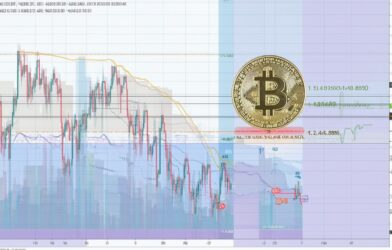
Bitcoin has evolved from an experimental digital currency to a global financial force, captivating both institutional and retail investors. The journey has been marked by extreme volatility, regulatory uncertainty, and periodic surges in adoption. As the spotlight turns toward predictions for 2025, varying opinions swirl around its potential, from bullish enthusiasm to cautious skepticism. Read on for an expert-driven technical and contextual analysis of Bitcoin’s likely performance in 2025, grounded in macroeconomic trends, historical price behavior, on-chain data, and evolving regulatory and adoption dynamics.
Drivers Behind Bitcoin’s Price in 2025
Successful Bitcoin forecasts require a holistic understanding of interlocking market forces. Several key themes dominate conversations among analysts and investors when considering the path toward 2025.
Institutional Adoption and Market Maturity
The entry of institutional players—hedge funds, asset managers, and fintech giants—has strengthened Bitcoin’s reputation as “digital gold.” Products like spot Bitcoin ETFs and crypto custody services have increased access, inviting larger pools of capital. Many industry observers expect this institutional trend to deepen, potentially reducing volatility and expanding liquidity.
Beyond ETFs, large corporations are adding Bitcoin to balance sheets, with companies such as MicroStrategy and Tesla setting high-profile examples. As mainstream financial products and regulatory clarity progress, the stigma surrounding crypto may continue to fall.
“The institutionalization of Bitcoin isn’t just a narrative—it’s a structural transformation,” notes digital assets strategist Meltem Demirors. “2025 could mark a tipping point in recognizing digital assets alongside traditional investments.”
Bitcoin Halving Effects
Bitcoin’s programmed supply schedule means that every four years, block rewards for miners are cut in half—a process known as halving. The most recent halving occurred in April 2024, reducing the reward to 3.125 BTC per block. Historically, halvings have preceded significant price rallies. Scarcity, combined with steady or increased demand, is central to bullish forecasts heading into 2025.
However, some analysts warn that each halving’s impact may be less dramatic as markets become more efficient and information is better priced in. Still, with new supply halved and institution-led demand rising, the fundamental argument for long-term appreciation remains strong.
Macroeconomic and Regulatory Factors
Bitcoin does not exist in a vacuum. Geopolitical tension, inflation, and interest rate fluctuations affect risk assets globally. For example, in times of persistent inflation or banking sector instability, Bitcoin is increasingly considered a hedge, prompting flows from both retail and institutional investors.
Regulatory developments are also crucial. Countries like the US, EU, and Japan are shaping frameworks for digital assets, influencing both market psychology and practical adoption. Market sentiment rises and falls on the clarity—and perceived favorability—of such regulations, directly impacting capital inflows or outflows.
Technical Analysis: Price Patterns and Forecasts
While the macro backdrop is pivotal, technical analysis provides a granular look at Bitcoin’s potential price evolution through 2025.
Historical Cycles and Price Bands
Bitcoin has exhibited multiple four-year boom-bust cycles, each loosely aligning with the halving schedule. Each cycle’s post-halving year saw notable upward movement:
- In 2013 and 2017, Bitcoin experienced exponential rallies following halving events.
- The 2021 bull run, influenced by global liquidity and retail interest, showcased unprecedented price acceleration, peaking near $69,000.
- Corrections and consolidation typically follow, marked by sharp drawdowns and lengthy periods of sideways action.
Previous cycle comparisons suggest that if history rhymes, Bitcoin’s 2025 price action could be marked by a significant uptrend, possibly testing or surpassing previous all-time highs. However, diminishing returns and more dynamic macro factors may moderate gains compared to earlier cycles.
Key Technical Levels and Scenarios
Technical analysts focus on support and resistance levels, long-term moving averages, and volume trends when crafting forecasts. As 2025 approaches:
- Support Levels: Many chartists point to strong support between $40,000 and $55,000, reflecting past consolidation periods.
- Potential Resistance: The $69,000-$75,000 range represents psychological resistance tied to previous cycle peaks.
- Breakout Possibilities: Should Bitcoin decisively break past its all-time high, technical targets often project Fibonacci extensions, targeting zones between $90,000 and $120,000—though this remains speculative and contingent on broader market conditions.
On-chain analytics, such as realized price, spent output profit ratios (SOPR), and long-term holder movements, further bolster technical forecasts. For example, increasing coins held by long-term investors and declining exchange reserves historically correlate with price appreciation, signaling reduced selling pressure.
Alternative Models and Limitations
Frameworks like the Stock-to-Flow (S2F) model, proposed by pseudonymous analyst PlanB, aim to quantify Bitcoin’s scarcity-driven appreciation. While the model had initial predictive value, recent cycles demonstrated greater price variance, suggesting broader factors—market psychology, liquidity, macro events—now play larger roles.
Other models, including network value-to-transactions (NVT) and dormancy metrics, offer alternative on-chain lenses. However, no single model has proven infallible, underscoring the need for multifactor analysis and prudent skepticism around deterministic forecasts.
Real-World Adoption and Use Cases in 2025
The practical utility and ecosystem building around Bitcoin are also critical to its long-term trajectory.
Payment Networks and Peer-to-Peer Transactions
While Bitcoin’s main narrative has been as a store of value, Lightning Network and layer-2 solutions are steadily improving transaction speed and cost. By 2025, broader Lightning integration may support micro-transactions, international remittances, and in-store payments, particularly in regions with less developed banking infrastructure.
Nation-State and Corporate Engagement
El Salvador’s move to adopt Bitcoin as legal tender in 2021 was historic. Since then, several countries have explored similar use cases, whether for remittances, reserves, or diversification. No tidal wave of state adoption has occurred, but ongoing pilot programs—especially in emerging markets and inflation-prone economies—could expand the narrative.
Corporates continue to explore Bitcoin for cross-border settlements and as an alternative reserve asset, with some experimenting with payroll solutions or supplier payments via digital currencies.
Security and Environmental Debates
Questions around Bitcoin’s environmental impact and network security persist. The sector has responded with initiatives targeting renewable energy adoption and efficiency improvements, and more mining firms may migrate toward green energy sources by 2025, aiming both for cost savings and reputation management.
Conclusion: Strategic Takeaways for Bitcoin’s 2025 Outlook
Forecasting Bitcoin’s price in 2025 involves countless variables: macroeconomic shifts, regulatory milestones, halving effects, adoption trends, and technical factors. Analysts widely expect increased legitimacy and broader access, especially as institutional and technological groundwork matures. Nonetheless, volatility and uncertainty remain the rule, not the exception.
A strategic approach involves recognizing Bitcoin’s ongoing maturation as an asset while treating specific price predictions with caution. For both investors and observers, ongoing monitoring of global trends, policy updates, and on-chain fundamentals is essential for navigating the ever-evolving crypto landscape.
FAQs
What are the main factors influencing Bitcoin’s price prediction for 2025?
Major drivers include institutional adoption, regulatory developments, halving-driven scarcity, macroeconomic trends, and the ongoing evolution of Bitcoin’s technical ecosystem. These factors collectively influence market sentiment and capital flows.
How could the 2024 Bitcoin halving affect prices in 2025?
Halving events historically reduce new supply, often correlating with price appreciation in the following year. While the effect may diminish over time, reduced issuance combined with potential demand increases could support bullish scenarios in 2025.
Can Bitcoin’s price reach $100,000 or more by 2025?
Though some analysts forecast such targets, price projections remain speculative. Achieving these levels would likely require a combination of sustained institutional investment, favorable regulations, and strong market sentiment.
Is Bitcoin becoming less volatile as more institutions participate?
Increased institutional involvement can enhance liquidity, which may help reduce some volatility. However, Bitcoin’s price can still experience sharp moves in response to macroeconomic shocks or sudden shifts in sentiment.
What risks should investors consider for Bitcoin in 2025?
Key risks include regulatory changes, security threats, environmental controversies, market manipulation, and broader economic downturns. Prudent portfolio management and ongoing research are advised for those exposed to crypto markets.
Will Bitcoin see wider real-world use by 2025?
Trends suggest growing integration in payments, remittances, and corporate treasury management, particularly as technical solutions like Lightning Network mature. Adoption may remain uneven, but the ecosystem is expected to continue expanding.